Start with the food-safety management system
GOV.UK says a food business needs a written food-safety management system based on HACCP principles. It commonly includes cleaning and hygiene rules, safe cooking and storage, allergen controls, staff training and temperature checks.
The officer may need to understand both the written method and the evidence showing that staff follow it. Records should be appropriate to the nature and size of the operation.
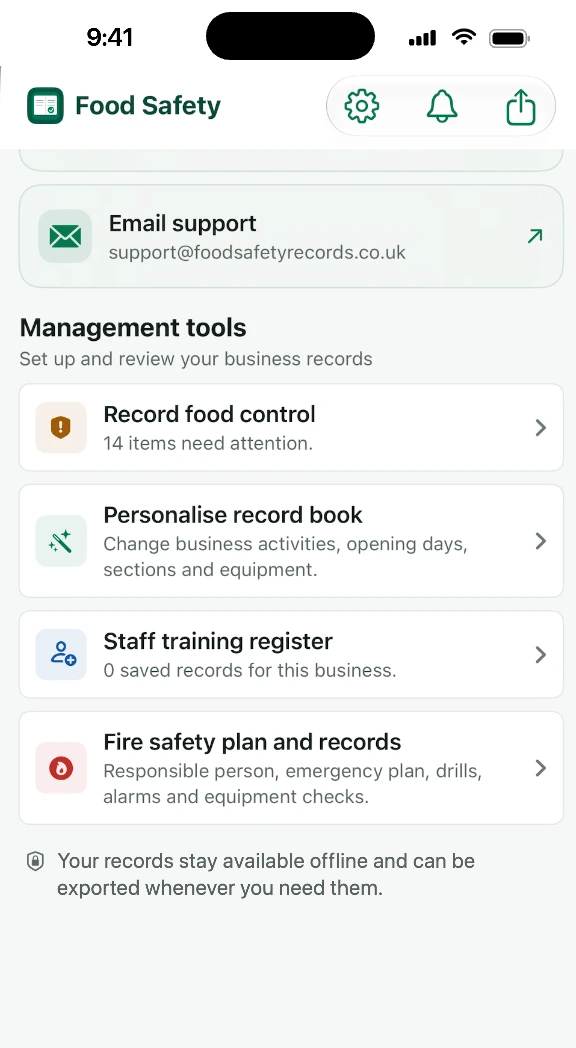
Food Hygiene Record Book can organise checks and reports. The business still owns its procedures, safe methods, training and legal responsibilities.
Record groups worth organising
- Temperature monitoring: fridge and freezer readings, cooking or reheating checks, targets and action on unexpected results.
- Cleaning: the schedule, completed tasks, responsible person and any extra cleaning or maintenance.
- Daily diary: opening and closing checks, unusual events, changes, actions and daily sign-off.
- Food control: delivery condition, supplier details, date labels, batches, monitoring and corrective action.
- People: staff instruction and training records that match their responsibilities.
- Traceability: up-to-date supplier and customer-business records where required, available for inspection.
- Review: evidence that persistent problems and changes to equipment, menu or process are reviewed.
Make each record answer four questions
- What was checked? Name the equipment, food, task or control clearly.
- When was it checked? Keep the correct date and, where useful, the real time.
- Who checked it? Use a responsible name, initials or verified account.
- What happened next? When something was outside the target, record the decision and corrective action.
A complete-looking record is not useful if it was filled retrospectively without an honest explanation. Record the real result and keep late entries distinguishable from checks made at the time.
Prepare without building a performance
Before an inspection, check that the current system is available, recent records open correctly, important gaps are understood and staff know how the routine works. Do not invent missing records. A genuine gap with an explanation and corrective action is safer than false evidence.