Register with your local council
GOV.UK says that if you sell, cook, store, handle, prepare or distribute food, you may be a food business. That includes businesses run from home, online and from mobile units.
- When: at least 28 days before you start trading (England, Wales and Northern Ireland).
- How: through the online Register a Food Business service, which sends your details to your local council.
- Cost: registration is free and can't be refused.
- Scotland: register with your local council; Food Standards Scotland publishes its own guidance.
Registration is not an approval or a certificate. After you register, a food safety officer may contact you to arrange an inspection of your kitchen.
GOV.UK says that if you register with Ofsted as a childminder, your details are shared so you do not have to register separately as a food business. Wales and Northern Ireland have different arrangements.
Put a food-safety system in place
Every food business needs a food-safety management system based on HACCP principles. For small businesses in England and Wales, the Food Standards Agency's Safer Food, Better Business (SFBB) pack is a common starting point. In Scotland, CookSafe is the equivalent, and in Northern Ireland, Safe Catering.
The system explains how you keep food safe: cooking, chilling, cleaning and avoiding cross-contamination. The records show you follow it.
Home kitchen practicalities
- Keep business ingredients and products separate from family food where you can, and label them clearly.
- Check your fridge temperature. Guidance says chilled food must be kept at 8°C or below, and recommends setting the fridge at 5°C or below.
- Keep pets out of the kitchen while you prepare food, and clean surfaces before you start.
- Know the allergens in everything you sell, and label food packed before sale properly.
- Make sure anyone who helps is trained for what they do.
Records worth keeping from day one
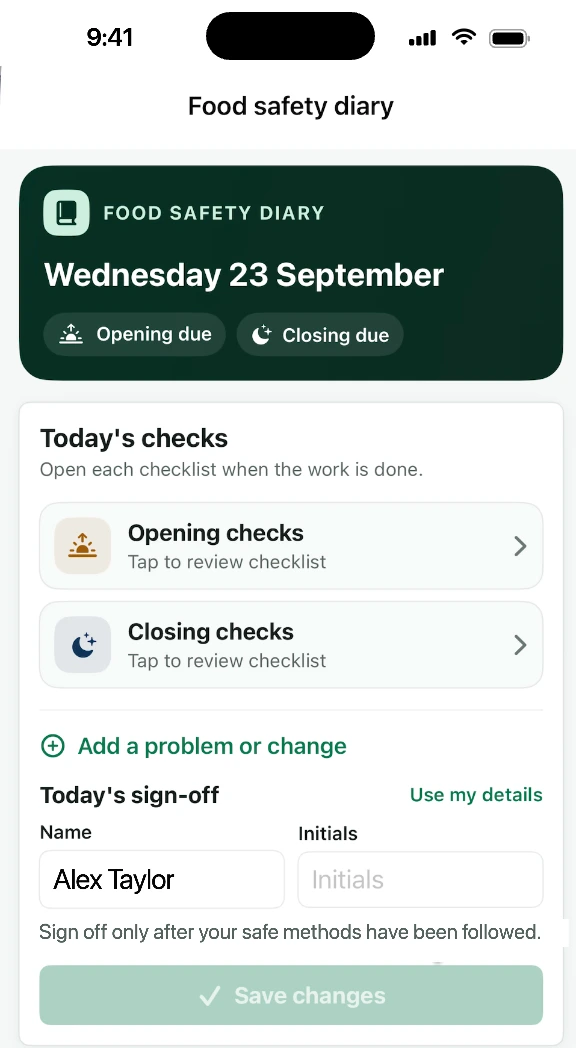
- Opening and closing checks for each day you prepare food.
- Fridge and freezer temperatures, and what you did about any unexpected reading.
- Cooking and cooling checks where your system needs them.
- Cleaning of your kitchen and equipment.
- Deliveries and suppliers, so you can trace ingredients.
- Training for you and anyone who helps.