A practical retention framework
- Identify the record. Daily diary checks, supplier traceability, staff training and HACCP verification do different jobs.
- Identify what it may need to prove. Consider an inspection, complaint, incident, recall or review of a persistent problem.
- Consider product life. MyHACCP advises businesses to think about product shelf life and possible misuse when deciding an appropriate period.
- Check the official scheme and local advice. Ask the local authority or a competent food-safety adviser where the answer is unclear.
- Write the decision down. A simple retention schedule helps staff apply the same rule consistently.
Some records are governed by specific legal, contractual or sector requirements. The business must confirm what applies to its products and activities.
What the official guidance says
The Food Standards Agency tells businesses using the SFBB diary to store completed diary pages safely until the next visit from a local-authority food-safety officer. It says this can be done electronically or with printed copies.
MyHACCP describes accurate record keeping as essential and says documentation should be appropriate to the nature and size of the operation. Its retention questions include the shelf life of the product, possible misuse, responsibility and who needs access.
Those statements are useful starting points, but they do not create one number that covers every daily, traceability, employment or specialist record.
Build a simple schedule
- Daily operating records: set a period that supports inspection, trend review and investigation of complaints or incidents.
- HACCP documents and reviews: retain current versions and enough history to explain changes, monitoring and corrective actions.
- Supplier and traceability records: keep them current, accessible and in line with the specific traceability rules that apply.
- Training records: keep evidence that supports the person's role, supervision and current competence.
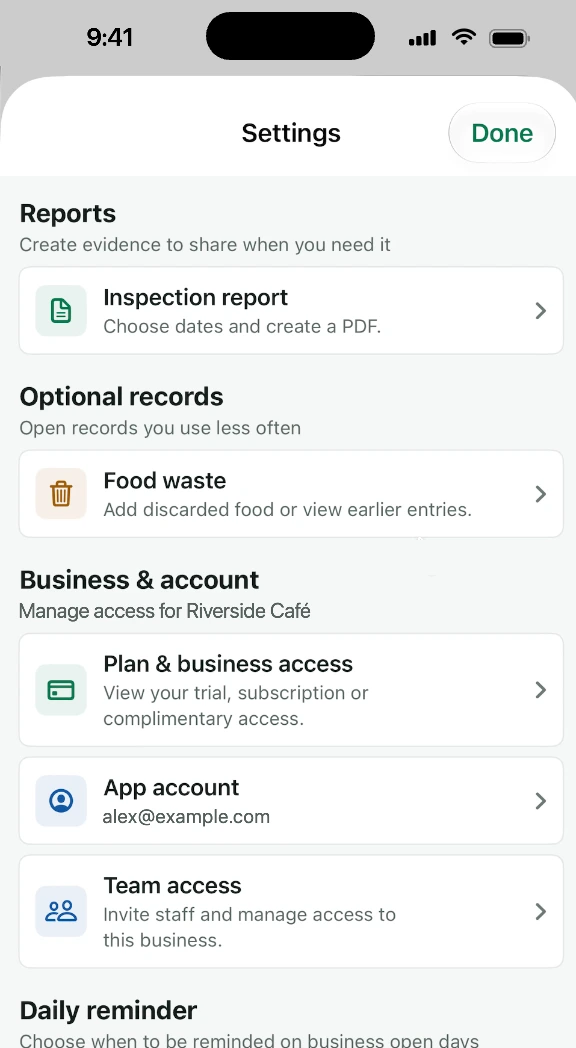
- Reports and exports: protect them from accidental loss and control who can access personal or business information.
Digital does not remove the responsibility
A digital record is useful when it stays readable, dated, attributable and retrievable. Backups, account access and device replacement should be considered before old paper is discarded. Export a report where a durable copy is needed outside the device.