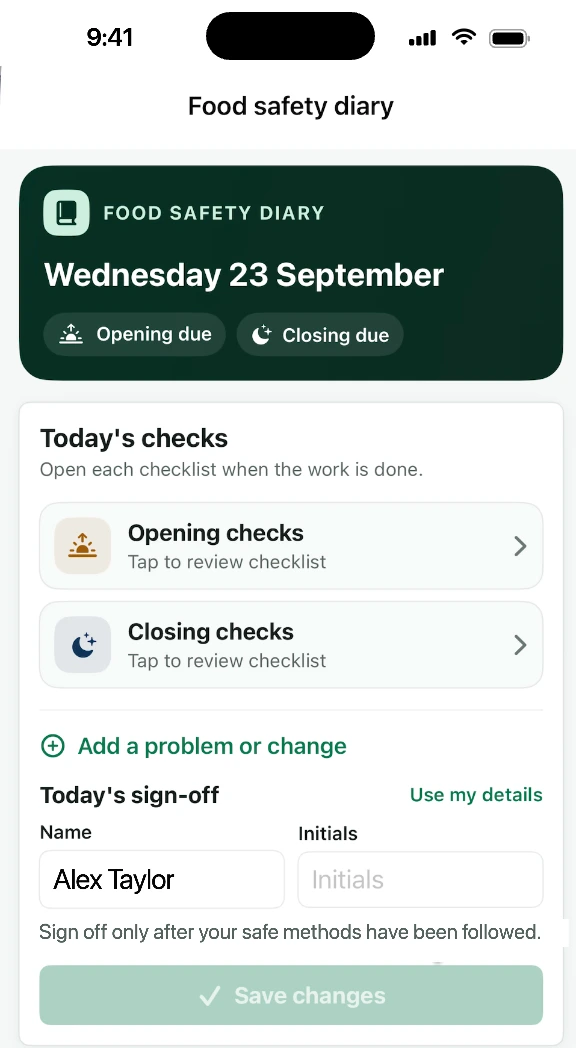
Opening checks
The official SFBB list covers the basic standards needed before food work begins. Adapt it to the equipment, menu and risks in the business.
- Fridges, chilled display equipment and freezers are working properly.
- Cooking and other essential equipment is working properly.
- Staff are fit for work and wearing clean work clothing.
- Food-preparation areas, equipment and utensils are clean and disinfected.
- There is no evidence of pest activity.
- Soap, paper towels, sanitiser and other cleaning materials are available.
- Hot running water is available at sinks and hand-wash basins.
- The probe thermometer works and suitable probe-cleaning materials are available.
- Allergen information is accurate for the food being sold.
Add checks that belong to this premises.
A bakery, pub, takeaway and mobile caterer will not have identical opening risks. Keep the core routine, then add the equipment or process checks that matter locally.
Closing checks
Closing is about leaving food, equipment and the premises in a controlled condition for the next service.
- Food is covered, labelled and chilled or frozen where appropriate.
- Food reaching its use-by date is dealt with correctly.
- Dirty cleaning equipment is cleaned or discarded.
- Waste is removed and bins are prepared appropriately.
- Preparation areas, equipment and utensils are clean and disinfected.
- Washing up is complete and floors are clean.
- Required monitoring or prove-it checks have been recorded.
- Any problem, change or corrective action is written beside the day's record.
Make the checklist usable
- Keep it visible. Put the routine where the opening and closing work happens.
- Assign responsibility. The person signing should understand what the sign-off means.
- Do not pre-tick. A completed box must represent a check that actually happened.
- Record exceptions. A problem without its action leaves the story unfinished.
- Review recurring issues. Repeated failures may require training, repair or a change to the safe method.
Use the official safe method
This page summarises the workflow; it does not replace the SFBB safe method. Complete the official material that applies to the business and follow advice from the local authority.
Official guidance used for this page