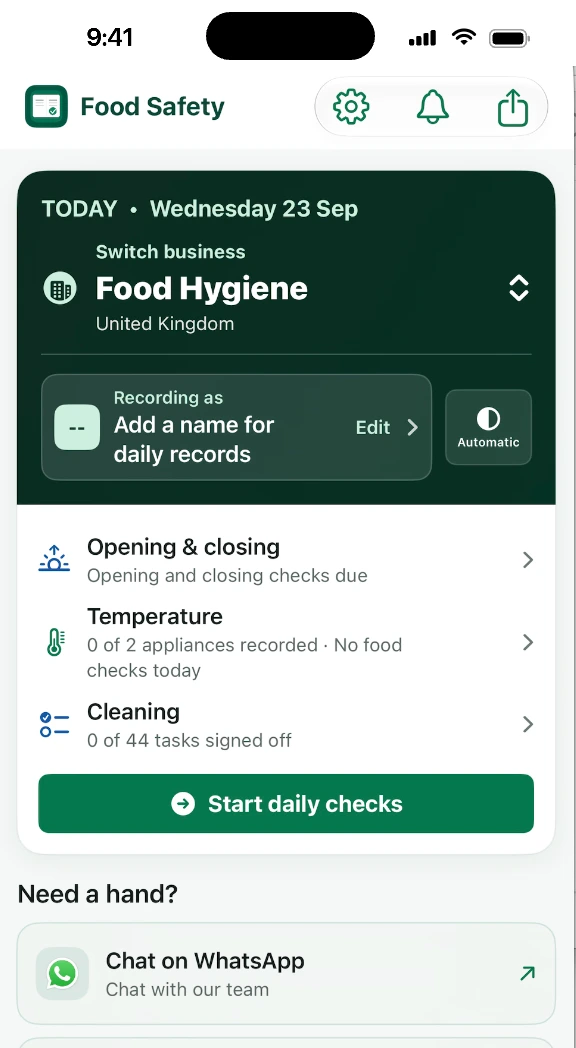
Run a real workflow test
- Install the app and create the type of business you actually run.
- Add one fridge and record a genuine reading.
- Enter an unexpected result and see whether corrective action is clear.
- Move to an earlier date and check whether missing work is visible.
- Generate a report for a chosen period and read it as an inspector would.
- Turn off the connection and see which daily functions remain available.
If the basics are slow or confusing with one appliance and one day, a longer feature list will not rescue the product after six months of records.
Questions that reveal the important differences
- Accuracy: can a copied or prepared row ever be mistaken for a completed check?
- History: can staff see missing and partly completed dates without opening every day?
- Scale: does a long record history remain smooth, grouped and searchable?
- Reports: can the owner choose the business, period and sections before exporting?
- Offline use: can essential local recording continue in a kitchen with poor signal?
- Access: are business roles, staff accounts and complimentary access clearly separated?
- Ownership: what remains available if the subscription ends?
- Recovery: can verified email, password reset and device replacement be handled safely?
- Support: is there a reachable person, clear privacy information and realistic response path?
Look for honest boundaries
A food-safety records app should not imply that installing software guarantees compliance, an inspection result or official approval. It should explain which official scheme applies, what its records support and what remains the responsibility of the food-business operator.
Marketing should also match the product: platform availability, trial length, subscription price and features should be the same on the website, store listing and inside the app.
Compare the price per business, included team members, report access, offline behaviour and the cost of moving or recovering records. A cheaper headline can become expensive if the daily process fails.
How Food Hygiene Record Book answers
The app is designed around one selected business, a focused daily dashboard and separate histories for temperature, cleaning, waste, SFBB and food-control records. Local creation and editing work offline during the trial and with active access. After the trial, records are locked for viewing and sharing; adding and editing records, optional cloud backup and team collaboration require active paid or complimentary business access.
It is an independent product. It does not replace official guidance, the business's food-safety management system, legal duties or an officer's judgement.